
"a species"
21000 article(s) found

Coffee species Coffee trees can be roughly divided into five types
Coffee is called coffea in the biological genus. This genus is a member of the Rubiaceae family. It has more than 500 species and more than 6000 varieties, most of which are tropical trees and shrubs. From the point of view of drinkers, coffee trees can be roughly divided into five species, of which Arabica and Robusta are more common. Arabica species account for more than 70% of the world's total output.
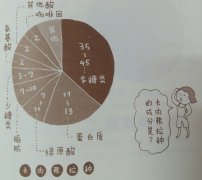
Figure out what ingredients raw coffee beans are made of.
In raw coffee beans, moisture accounts for 9% to 13%, and moisture has little effect on the aroma of coffee beans. Later, I will introduce the content of various ingredients (calculated according to the state of dried raw beans). When the share of these ingredients changes, the flavor of coffee beans will also change greatly. The most abundant ingredient in polysaccharide raw beans is polysaccharides, accounting for 35% and 4%.
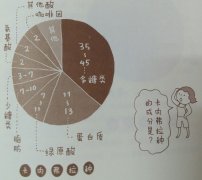
What ingredients are raw coffee beans made of?
What ingredients are raw coffee beans made of? In raw coffee beans, moisture accounts for 9% to 13%, and moisture has little effect on the aroma of coffee beans. Later, I will introduce the content of various ingredients (calculated according to the state of dried raw beans). When the share of these ingredients changes, the flavor of coffee beans will also change greatly. Content in polysaccharides raw beans

Coffee tips: what is the price of Arabica coffee beans in coffee producing areas
Professional coffee knowledge exchange more coffee bean information please follow the coffee workshop (Wechat official account cafe_style) Arabica _ Arabica coffee beans and Robusta coffee beans are made by roasting the seeds of the fruits of this plant. Coffee trees belong to the genus Coffea of the family Rubiaceae, a dicotyledonous family of angiosperms. There are about 70 species of coffee plants, of which two are

Interspecific hybrid variety | A variety derived from the cross between Alabi Karabusta and wild species
The exchange of professional baristas please pay attention to the coffee workshop (Wechat official account cafe_style) Interspecific hybrid variety [Centroamerica H1] Sarchimor T5296 x wild Rume Sudan, which is crossed between Alabi Carolbusta and wild species, dwarf, green top, planting density such as bourbon, 30004000 plants per hectare, medium-sized beans, low resistance to leaf rust
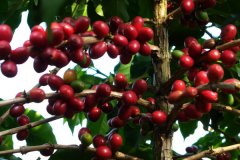
Blue Mountain Fine Coffee Jamaican Coffee
Boutique coffee beans must be excellent varieties, such as the original bourbon species, mocha species and Tippica species. The coffee beans produced by these trees have unique aroma and flavor, which is far from that of other tree species, but the relative yield is low. in recent years, in order to pursue the ability of disease and insect resistance and increase the yield, there have been many improved tree species, such as the massive promotion of high-yield rurial11 species in Kenya.

What is the Elaraby card-derived species | how to distinguish Arabica from robusta beans
Professional coffee knowledge exchange more coffee bean information please follow the coffee workshop (Wechat official account cafe_style) Bun (this is the earliest human history to describe the characteristics of coffee, but also the earliest name of coffee, Ethiopia still calls coffee (Buna). The main producing area of Buna in Ethiopia comes from the Kafa forest in the southwest, with scholars and experts.

A brief introduction to the classification of Arabica beans Blue Mountain Coffee belongs to Arabica's powerful genetic myth.
Professional coffee knowledge exchange more coffee bean information please follow the coffee workshop (Wechat official account cafe_style) front street-Arabica coffee bean variety introduction Arabica species account for 70% of all coffee production, is the most important commercial coffee bean. Arabica species were introduced into Europe from the Arab region and can be divided into Tibika species and Bourbon subspecies according to their different places of introduction.

Katim Coffee Bean Flavor description method introduction to the characteristics of varieties and the degree of taste grinding
Katim Coffee Bean introduces that some varieties are derived from natural genetic mutations, while others are the products of artificial cross breeding or acquired breeding of native species. Arabica species are self-pollinating plants, and their genetic lineage should be quite pure. However, Tibika species and bourbon species have been brought to new countries, foreign climate conditions lead to natural gene mutations, and cultivated new varieties

Understand the type of coffee by the definition of tree species and market
We know that there are so many kinds of coffee in the world, so it is a headache to know them one by one. In fact, there are some screening criteria that make it easier for us to understand the types of coffee. First of all, we can narrow the cognitive scope from the species of coffee trees. Contemporary botanists have discovered more than a hundred species of coffee, but only one of them is Coffea Arabica.

SNNPR District of Ethiopia | Williambutt special washing wild species, green roses in Rosa Village Garden
For more information on coffee beans, please follow the coffee workshop (Wechat official account cafe_style) SNNPR District, Ethiopia | what is the flavor of Williambutt special washing wild species and green roses in Rosa Village Garden? SNNPR Region Bancimaji (Bench Maji Zone) Gori Gesha Forest in the national Ethiopia (Ethiopia) producing area

Two pictures of coffee family tree in Chinese and English to learn more about coffee variety system.
Coffee variety is one of the three elements of fine coffee variety, altitude and processing, among which coffee variety is one of the most important elements. Understanding coffee family tree is a necessary knowledge to learn fine coffee. In fact, there are hundreds of coffee tree species on the earth, nearly 100 in Arabica alone, but when it comes to fine coffee, only Arabica beans can be called.

Basic knowledge of coffee varieties of raw coffee beans
Coffee is the first tropical cash crop in terms of output, consumption and economic value among the three major beverages in the world. it is the second raw material after international trade relay oil, and it is also one of the largest tropical food raw materials in the world. The coffee variety garden covers an area of 3 mu, which mainly lies in the collection and preservation of coffee variety resources. the varieties are carried out on the basis of the observation of its botanical and biological characteristics.

Introduction to the price and taste of Liberian coffee beans
Liberica coffee, which usually grows on slopes about 200 meters above sea level, is not big, about 10 to 20 feet high. Lilika coffee is a kind of tree species with strong resistance to disease and environmental adaptability, so Liberica coffee can be grown in subtropics compared with other tree species. The most suitable temperature for growth is 19-27 ℃. Liberica coffee tree from the outside, it
High-quality coffee learn the variety of raw beans
Coffee is the first tropical cash crop in terms of output, consumption and economic value among the three major beverages in the world. it is the second raw material after international trade relay oil, and it is also one of the largest tropical food raw materials in the world. The coffee variety garden covers an area of 3 mu, which mainly lies in the collection and preservation of coffee variety resources. the varieties are carried out on the basis of the observation of its botanical and biological characteristics.
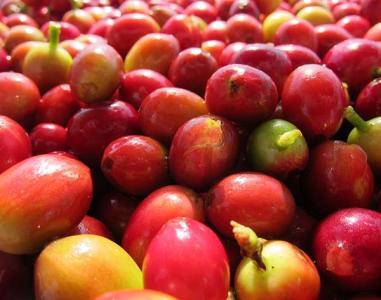
How many Arabica species in Ethiopia have their names?
Since ancient times, Ethiopians have planted, harvested, treated and cooked by hand. In the 1970s and 1980s of industrialization, the country also benefited from misfortune because it promoted socialism and retained small-scale production under the prohibition of the military regime Derg. Until modern times, the planting mode of farmers is also quite primitive. In the western forest region (Kaffa, Illubabor), they will

Flavor and taste characteristics of Indonesian coffee introduction to Arabica Coffee Manor in Manor producing area
Arabica coffee beans grow in tropical colder high-altitude areas, and the hot and humid zone that is not suitable for Arabica coffee is where robusta coffee grows. Robusta has a unique aroma (called Rob smell, which some people think is musty) and bitter, accounting for only 2% of mixed coffee. 3% of mixed coffee, the whole cup of coffee becomes Robusta flavor. Its flavor
Coffee botany
There are more than 60 kinds of coffee, but there are roughly two varieties of coffee grown commercially on a large scale, one is Arabica, accounting for about 70 percent of the world's coffee planting area, and the other is Robasta, accounting for about 30 percent of the world's coffee planting area. According to our national standards, the classification of coffee is mainly divided into the following five varieties. 1. Small seed coffee, that is, Arabian species. Originated in Ethiopia

Coffee tasting | bourbon species with different flavors
Professional coffee knowledge exchange more coffee bean information please follow the coffee workshop (Wechat official account cafe_style) early (coffee prehistoric) iron truck transplanted to Yemen after the mutation, the bean shape from thin to round. It was named bourbon in 1715 after France transplanted round beans from Yemeni mocha to the island of Bourbon on the east coast of Africa (renamed Reunion after the French Revolution).

Varieties of raw coffee beans introduction of fine coffee beans
Coffee is the first tropical cash crop in terms of output, consumption and economic value among the three major beverages in the world. it is the second raw material after international trade relay oil, and it is also one of the largest tropical food raw materials in the world. The coffee variety garden covers an area of 3 mu, which mainly lies in the collection and preservation of coffee variety resources. the varieties are carried out on the basis of the observation of its botanical and biological characteristics.